Dubai’s market can cool without collapsing. The UAE’s property market bubble risk in 2026 is elevated: UBS’s index score for Dubai is 1.16, within its elevated-risk band of 1.0 to 1.5. In October, Dubai’s property price index edged up month on month, while apartment and villa values remained lower year over year, a mixed picture that points to cooling rather than a clear market-wide crash.
It’s reasonable to weigh recent price growth against the prospect of more homes entering the market. The key question is whether demand, supported by population growth, can absorb that supply, and how the answer varies by property type and location. An elevated risk score is a reason to assess carefully, not a prediction that every Dubai property will lose value.
This article looks at signs of cooling, the relationship between population growth and housing supply, and practical ways to assess an investment amid uncertainty. It offers a measured view of where risks may be more pronounced and why rental demand, holding period, resale assumptions and property fundamentals matter when considering a purchase.
Key Takeaways
- Assess demand by property type and location: population growth supports housing needs, but doesn’t ensure every segment absorbs new homes equally.
- S&P Global Ratings expects Dubai’s residential unit supply to increase by 20 per cent in the next two years, making delivery timing and competing inventory important considerations.
- Stress-test a purchase against a 10% resale-price decline, and weigh whether a five-year holding period suits your plans.
- If you may need to move within three years, consider how a shorter holding period could affect your exposure to market fluctuations.
- Mortgage costs and borrowing capacity influence what buyers can afford, which in turn can shape housing demand.
Table of Contents
Is Dubai’s Property Market Cooling in 2026?
Dubai’s market is cooling in some measures, but the signals aren’t uniform. Residential sales reached 80,509 in the first half of 2026, with a value of AED 226.5 billion. Prices also continued rising in nominal terms during the second quarter, while inflation-adjusted gains were modest. Transaction activity, prices and rents therefore tell different parts of the market story.
That figure provides context for completed flats, not a valuation for every building or district. Property type, condition, location and comparable transactions still shape an individual asset’s value. Investors should not use a single Dubai-wide measure as a substitute for property-specific analysis.
Prices relative to rent and income add another lens. A skilled service worker in Dubai needs about five years of average income to buy a 60-square-metre apartment near the city centre. It takes 16 years of rent to pay for an equivalent apartment. These measures describe affordability and ownership economics; they don’t establish whether a particular property is overvalued.
Forecasts should be treated as scenarios, not outcomes. Emaar Properties founder Mohamed Alabbar forecast an adjustment of 5 per cent to 10 per cent amid market uncertainty. The estimate is a view about possible market pressure, not evidence that prices have already fallen by that amount. Oil-price movements can also influence confidence and business activity, adding another source of volatility without determining property performance alone.
The 2008 downturn and 2026 conditions differ in their market context. Dubai experienced a sharp downturn until April 2009 during the global financial crisis. The available timeline records growth moderation as supply increased during 2015-2019, rather than identifying 2014 itself as a comparable crash. In 2026, assess current activity and property fundamentals instead of assuming either period will repeat.
Foreign-investor and cash-buyer shares are separate measures, and the categories can overlap: a foreign buyer may also pay cash. The significance of each share depends on the transactions being measured, so don’t combine the categories as if they were mutually exclusive. For market analysis, distinguish buyer residency from funding method.
Assess bubble risk using several indicators together: prices relative to rents and income, transaction activity, new supply, and reliance on borrowing. Sustainable growth depends on demand that supports ownership costs and occupancy, not just expectations of resale appreciation. In a downturn, developers may face weaker sales or more unsold inventory, while banks may face pressure through property-linked loans and repayment difficulties. These are potential risk channels, not measures of actual exposure.
Dubai population growth and housing demand
Dubai’s population officially surpassed 4 million residents in 2025, while growth approached 15% between 2020 and 2025. More residents can support demand for homes, but population growth alone doesn’t determine prices. Household formation, income, preferred locations and the type of housing available all influence which segment benefits. Demand for apartments, family homes and premium residences may therefore develop differently.
The Dubai 2040 Urban Master Plan sets a longer-term context for this expansion. Launched in March 2021, it targets a population of 5.8 million by 2040. That target signals planned urban growth, not a guarantee that every housing project will find buyers or tenants. For investors, the practical question is whether completed homes match residents’ budgets, location needs and preferred property types.
Affordability comparisons need careful interpretation. A global comparison is meaningful only when it uses comparable home sizes, locations, income measures and purchase assumptions. For Dubai property, assess local housing costs against the income of the likely buyer or tenant. A premium apartment and a more accessible home serve different demand pools, even in the same district. Price growth in one segment may not represent the wider market.
UBS’s Global Real Estate Bubble Index places Dubai in its elevated-risk band. Its score rose from 1.09 a year earlier to 1.16 in 2026, and Dubai ranked fourth among the 23 cities covered. UBS defines elevated bubble risk as scores between 1.0 and 1.5. The rating identifies pressure in the market; it doesn’t mean that prices must fall or that every property faces equal risk.
That distinction matters when considering a moderate correction scenario. Some Dubai market segments could see a price correction of around 10-15% as new supply enters. Population growth may help absorb homes, but the result depends on where projects are delivered, their price points and whether they suit residents’ needs. Strong citywide expansion can coincide with weaker pricing in a particular segment.
Use population and risk measures together, rather than treating either as a complete forecast. The population target describes Dubai’s long-term ambition; the UBS score reflects assessed bubble risk in 2026. For a purchase decision, connect those signals to a specific property: identify its likely resident or tenant, the competing projects, and whether its price fits that demand. This approach keeps broad growth expectations from obscuring local supply or affordability pressures.
Expected residential supply from 2025 to 2027
Dubai has thousands of residential units scheduled for completion between 2025 and 2027. That pipeline matters because supply affects buyers’ choices, rental competition and the time needed to sell or lease a home. S&P Global Ratings expects Dubai’s residential unit supply to increase by 20 per cent in the next two years. The effect will depend on when homes are delivered and where they sit.
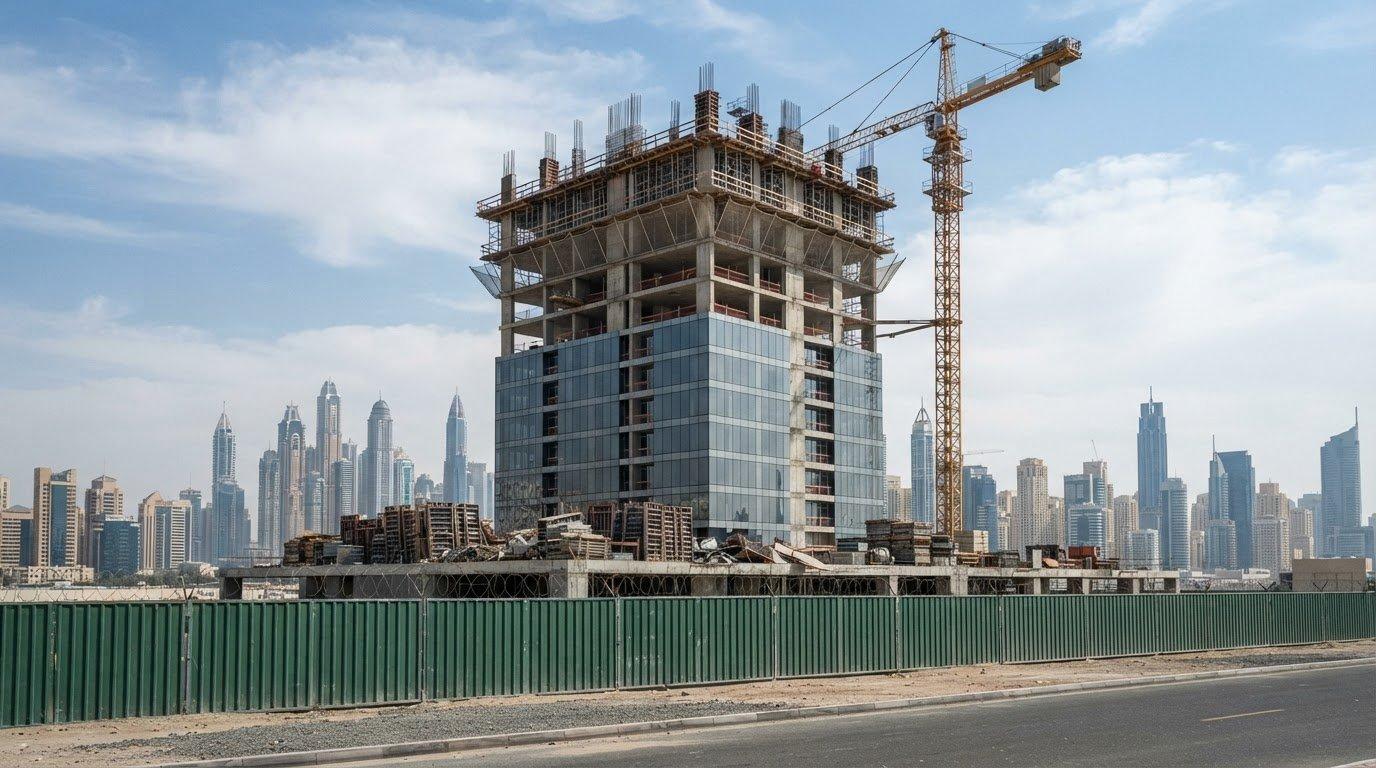
Building permits offer another signal. Dubai construction could reach levels last seen in 2017, based on permit activity. A permit indicates planned development, not a completed home ready for occupation. Investors should distinguish announced projects, active construction and completed inventory. Those stages have different implications for near-term availability, particularly when several developments target similar buyers or tenants.
The timing of completions can concentrate competition. If several residential projects in one area are handed over around the same time, landlords may compete for tenants and sellers for buyers. A citywide supply increase doesn’t mean every district faces the same pressure. Compare incoming homes with existing properties in the same segment, including location, size, finish and intended resident.
Demand provides the counterweight. Dubai’s Urban Master Plan targets 5.8 million residents by 2040, creating a long-term population-growth context. That target doesn’t establish how quickly households will form or which homes they will seek. A useful assessment connects each project’s expected completion with its likely residents, affordability and competing residential supply, rather than relying on the citywide target alone.
When considering a property under construction, focus on delivery and resale assumptions. Identify the project’s expected handover period, nearby developments scheduled for a similar time, and the intended tenant or buyer. Then consider whether comparable completed homes may offer alternatives at handover. These checks help distinguish a project with a clear demand profile from one relying mainly on broad price growth.
Supply also shapes how to interpret a real estate bubble risk assessment. Price growth can weaken if completed homes outpace demand, even while Dubai’s population expands. Conversely, new homes that meet active demand may broaden choice without creating uniform downward pressure. Compare local availability with transaction activity and rents, and account for inflation when interpreting nominal price changes. A citywide average can conceal sharp differences between districts and property types.
The latest pipeline is therefore a risk factor, not a verdict on its own. Track project delivery, competing inventory and the target resident together. For each residential asset, test whether demand remains credible if nearby homes become available at the same time. This gives a more grounded view of supply pressure than treating every planned unit as immediate inventory.
Investment approaches during market uncertainty
Start with your investment horizon. A five-year holding period is a practical starting point for Dubai buyers because it extends beyond short-term price movements. If you may need to move within three years, consider how a shorter ownership period could affect your options. A forced sale during a weaker market can make timing more important than the original purchase rationale.
Stress-test the resale assumption before committing capital. The recommended scenario is a 10% resale-price decline. Apply it to the expected exit value, then assess whether the purchase still fits your financial plans. This is a planning test, not a prediction. It helps investors see how sensitive their decision is to price movement before relying on future appreciation.
Rental income deserves the same scrutiny. Dubai’s average residential rental yield was 6.3% as of August 2026, while apartments averaged 6.7%. These are gross yield measures, not a promise of net income. Compare the likely rent for the specific property with its purchase price, then account for ownership costs and periods without a tenant.
For illustration, an apartment priced at AED 1.8 million with annual rent of AED 125,000 has a gross price-to-rent ratio of about 14.4 years. That calculation provides context, not a complete return forecast. Buyers should also consider whether the rent is achievable for the unit’s location, condition and target tenant, and whether their plans depend on rental income.
Separate the property’s fundamentals from the market narrative. Recent price growth can attract investors, but demand for a particular apartment depends on its competing supply, location and likely occupier. An income-focused buyer may weigh rent and capacity to hold more heavily; a future end user may prioritize suitability and timing. Neither approach removes market risk.
Use a simple decision sequence: define the holding period, test the 10% decline scenario, then assess rental assumptions against the specific property. Next, consider whether the investment still suits your plans if resale takes longer than expected. These steps connect the purchase price, income potential and exit assumptions instead of treating each as a separate promise.
Liquidity matters too. A property may remain attractive over the long term but prove difficult to sell at the expected price during a weak period. Distinguish an asset’s long-term appeal from the timing and terms of a potential sale. A recent market report or broad average cannot replace analysis of the unit’s location, condition and likely buyer pool.
Choose a property only when its ownership costs, income assumptions and holding period make sense together. For Dubai investors, a clear downside scenario can help put uncertainty in perspective. It won’t eliminate volatility, but it can show whether the decision depends on uninterrupted price growth or has a more resilient rationale.
Impact of Rates and Financing on UAE Housing Demand
Mortgage rates affect what buyers can afford in the UAE. Higher borrowing costs raise monthly payments, reducing the purchase price a household can support on the same income. Lower financing costs can broaden the pool of eligible buyers, but they don’t guarantee stronger demand. Employment stability, savings, property choice and confidence also influence whether a buyer proceeds.
Loan-to-value, or LTV, describes the share of a property’s value financed through a mortgage. The buyer funds the remaining portion, alongside applicable purchase costs. A lower permitted LTV means a larger deposit and may narrow the pool of mortgage-dependent buyers. Cash purchasers aren’t affected in the same way, though market sentiment and resale demand still matter to them.
For a UAE purchase, separate your property budget from your financing budget. First, establish the expected purchase price and available capital. Then model the deposit, monthly repayments and other ownership costs using the terms available to you. Keep the calculation specific to the property: a ready apartment and an off-plan purchase can have different payment schedules and financing considerations.
Rate structure matters, too. A fixed rate can make payments more predictable during the agreed period; a variable rate can change as its underlying reference rate changes. Compare the initial payment with the payment exposure after any fixed period ends. The UAE Central Bank’s policy environment can influence borrowing conditions, but individual mortgage pricing and approval depend on the lender and borrower.
Financing can affect demand unevenly across Dubai. Buyers relying on mortgages may become more cautious when repayments rise or borrowing capacity tightens. This can weigh more heavily on properties sought by payment-sensitive households. Cash-rich buyers may face less immediate rate pressure, but they still assess rental income, resale prospects and competing supply before committing capital.
Stress-test your financing before making an offer. Model the planned repayment, then test a higher payment and lower achievable rent. Check whether the purchase remains manageable without relying on future price growth. As an investor, compare expected rental income with financing costs and likely ownership expenses. As an end user, consider income stability and whether the home remains affordable if rates change.
UAE mortgage demand depends on more than the headline rate. LTV conditions influence the deposit, rates affect repayment capacity, and lender assessments shape access to finance. These factors can slow or support transactions without determining market direction on their own. In Dubai, assess financing alongside the property’s location, buyer profile and competing homes, rather than treating easier credit as proof of sustainable price growth.
Terra Firma
Terra Firma helps buyers and investors assess UAE property opportunities against market conditions, location and intended use. When uncertainty makes timing or property selection more complex, its transaction advisory supports decisions across ready and off-plan purchases, commercial properties and retail spaces throughout the Emirates.
Assess the specific property alongside broader indicators: expected demand, competing supply, rental potential and your planned ownership period. This keeps a market-wide UAE property market bubble risk 2026 assessment in perspective and connects the investment decision to your objectives, rather than relying on price growth alone.
For a considered discussion of UAE property opportunities, contact Terra Firma.
Make your next property decision with clarity
The UAE property market bubble risk in 2026 is best treated as a planning condition, not a signal to rush or retreat. A sound decision starts with the role the property should play in your life or portfolio, and the trade-offs you’re prepared to accept.
Set your criteria before reviewing individual opportunities. Define your intended ownership period, the purpose of the purchase and the income or use case that would make it worthwhile. Consider how the decision holds up if a sale takes longer, rental income differs from expectations, or financing costs change. This gives you a consistent basis for assessing properties instead of relying on market sentiment alone.
Terra Firma can help you assess property options against these priorities. Bring a clear view of your objectives and use the discussion to identify a considered next step.
Discuss your Dubai property options with Terra Firma and move forward with a plan shaped around your goals.
Frequently Asked Questions
How much have Dubai property prices dropped?
No single figure describes price changes across all Dubai properties. The result depends on the property type, location and comparison dates. To assess a specific home, compare recent completed sales of similar properties in the same area, rather than relying on asking prices or a citywide average. Distinguish changes in estimated value from actual transaction prices.
Will Dubai Real Estate Market Crash?
A market crash is not a certainty. Distinguish a broad downturn from a correction affecting particular properties or locations. For a specific purchase, consider whether demand for that asset depends on resale price growth, or whether its use and income case remain viable under less favourable conditions. This distinction is more useful for planning than treating a forecast as a definite outcome.
Final Thoughts: Risk or Opportunity?
It depends on the property and the buyer’s objectives. A home that suits an end user may be assessed differently from an investment chosen primarily for resale. Define what would make the purchase successful before committing: intended use, affordability, income potential or future flexibility. Then assess the opportunity against those priorities rather than assuming a citywide trend applies equally to every asset.
How long should I hold Dubai property to justify buying costs?
There is no universal holding period that guarantees you will recover buying costs. Build a break-even estimate by comparing the initial outlay and ongoing ownership expenses with net rental income and likely sale proceeds. Allow for the possibility that a sale takes longer than expected. This calculation helps show whether the property fits your plans, especially if you may need access to your capital sooner.
Should I hold and rent it out, or sell?
Hold and rent the property if it remains suitable for your goals and expected rent supports its ongoing costs. Consider selling if your need for liquidity or intended use has changed. Compare realistic rent for the specific unit with its expenses, and weigh that against a sale based on comparable completed transactions. The choice depends on your financial needs and the property’s individual prospects.
What Does This Mean for Investors?
Make the investment case specific to the property. Identify its likely occupier, why that person would choose it, and what alternatives are available nearby. For commercial property, consider how the space serves its intended business use; for residential property, focus on the likely household. This helps establish whether the rationale rests on practical demand or mainly on expectations of resale growth.
What are UAE property price and transaction trends in 2025 and 2026?
The pattern shifted from stronger real price growth in 2025 to more mixed price and transaction signals in 2026. Read transaction counts and sales values alongside price indexes: they measure activity and pricing differently. For a specific investment, the useful comparison is between the same property type and location over comparable periods. Broad trends provide context, but they don’t establish an individual property’s value.
How should buyers assess new residential supply in Dubai in 2026?
Assess supply by looking at homes likely to compete directly with the property. Compare their locations, intended residents, completion timing and price positioning. A planned development is not the same as a completed home available to a buyer or tenant. For an investment decision, focus on nearby competing inventory and whether the property offers a distinct fit, rather than relying on a single citywide supply estimate.