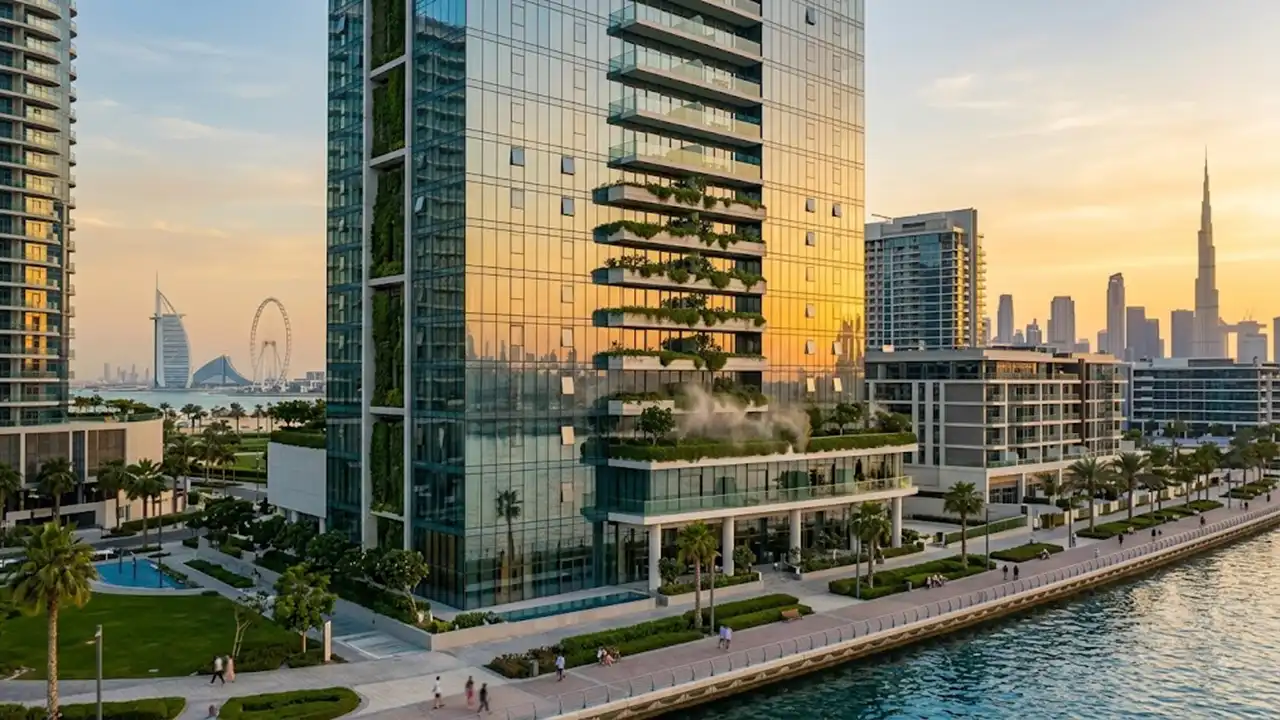
Dubai Property Prices: Why Average Prices Do Not Tell the Full Story
One of the biggest mistakes property investors can make is treating Dubai as one single real estate market.
It isn’t.
Property prices, rental demand and investment potential can vary significantly from one community to another. A waterfront apartment in Dubai Marina, a family villa in a mature residential community, and an off-plan apartment in an emerging area can all experience very different market conditions—even when they are located within the same city.
Recent market data has shown that Dubai property prices continued to rise, while growing new supply has started to moderate the pace of price growth. This makes it increasingly important for investors to look beyond headline citywide averages.
Look Beyond the Average Price
When evaluating a Dubai property, investors should consider more than the advertised purchase price.
Key factors include:
- Price per square foot – Compare the property with similar units in the same community.
- Rental income – Strong rental demand can significantly improve investment returns.
- Service charges – Higher annual costs can reduce net rental yields.
- Occupancy levels – Areas with consistent tenant demand can provide greater income stability.
- Upcoming supply – New developments can affect both rental competition and resale values.
- Developer track record – Delivery history and construction quality matter, particularly for off-plan investments.
- Infrastructure and connectivity – Roads, public transport, schools, retail and future infrastructure can influence long-term demand.
- Resale activity – A strong secondary market can make it easier to exit an investment.
Why Location-Level Analysis Matters
A property that appears expensive when compared with Dubai's overall average may actually be competitively priced within its specific community.
For example, two apartments with similar sizes can have very different values because of their location, views, building quality, amenities, service charges and rental demand.
The same applies to properties that appear inexpensive. A lower purchase price does not automatically mean better value if the property has weak rental demand, high ownership costs or significant competing supply coming to the market.
The Better Question for Investors
As Dubai's property market continues to mature, investors need to become more selective.
The question is no longer simply:
"What is the average property price in Dubai?"
A better question is:
"What am I getting for the price I am paying?"
That means comparing the property's price, potential rental income, operating costs, location, future supply and resale prospects within its specific market—not against Dubai as a whole.
For investors looking at Dubai real estate in 2026, understanding the difference between price and value could be more important than simply chasing the areas with the highest price growth.