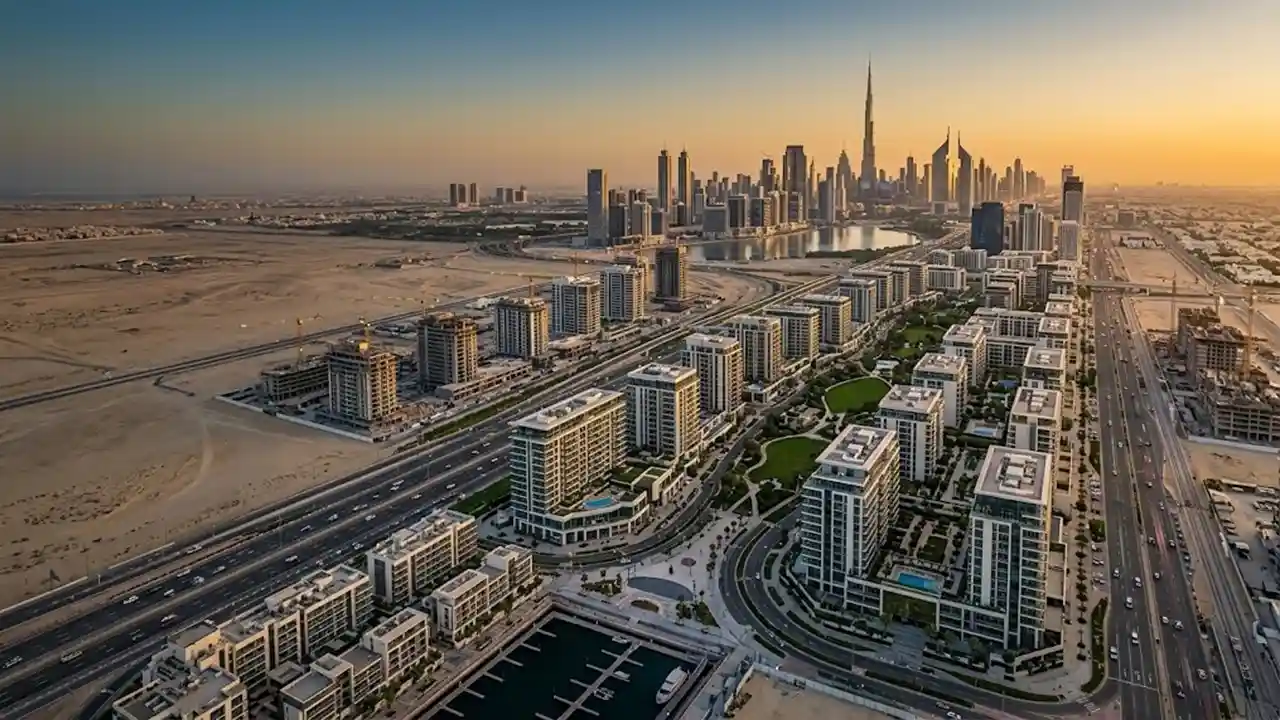
Dubai Real Estate Market 2026: The Shift from Fast Growth to Smart Selection
After several years of exceptional growth, the Dubai real estate market is entering a new and more mature phase. Demand has not disappeared, Dubai has not lost its long-term appeal, and quality properties are still attracting buyers. However, the period when almost any launch could sell quickly and almost any investor could expect an easy resale profit is changing.
The defining theme of 2026 is not market collapse. It is market selection.
Buyers now have more choice. They are negotiating more carefully, comparing projects more seriously and asking better questions about developers, future supply, rental demand and resale liquidity. This is healthy for the market—but it also means that the difference between a strong investment and an average one is becoming much wider.
There is also no single “Dubai property market.” A Grade A office in an established business district does not behave like a studio apartment in a heavily supplied community. A well-located townhouse bought for end-user demand has a different risk profile from an off-plan apartment purchased primarily for flipping. Investors therefore need to analyse each segment separately.
A Strong Start Followed by Normalisation
Dubai began 2026 with considerable momentum. According to the Dubai Land Department, the total value of real estate transactions reached AED 252 billion in the first quarter, a 31% year-on-year increase, while transaction volume rose 6% to 60,303.
The second quarter produced a more cautious picture. Savills reported 35,884 residential transactions in Q2, down 19% from the previous quarter, as buyers became more selective amid higher supply, greater choice and regional uncertainty.
These two sets of figures are not contradictory. Together, they describe a market moving from extraordinary momentum towards normalisation. Activity remains substantial, but purchasing decisions are taking longer and buyers are no longer accepting every asking price or payment plan.
New supply is also becoming more important. DLD reported that 104 projects were completed in the first half of 2026, adding 24,537 units. This does not automatically mean that Dubai is oversupplied everywhere. Supply is highly uneven: some apartment communities face considerable competition, while quality villas, well-positioned townhouses and prime commercial units remain relatively difficult to replace.
Off-Plan Property: Still Important, but No Longer an Automatic Win
Off-plan property remains a major part of Dubai’s market. Attractive payment plans, modern specifications and access to new communities continue to draw both international and local buyers. The right off-plan purchase can still offer capital appreciation and a manageable payment structure.
But investors should stop treating every new launch as an investment opportunity.
In the current market, the brochure, reservation form and sales presentation are only the beginning. Before purchasing, buyers should review:
- The developer’s construction and delivery record
- The project’s escrow and registration status
- Whether instalments are linked to construction progress, calendar dates or handover
- The contractual completion date and any extension rights granted to the developer
- Assignment and resale restrictions before completion
- The likely volume of competing units at handover
- Expected service charges and realistic rental demand
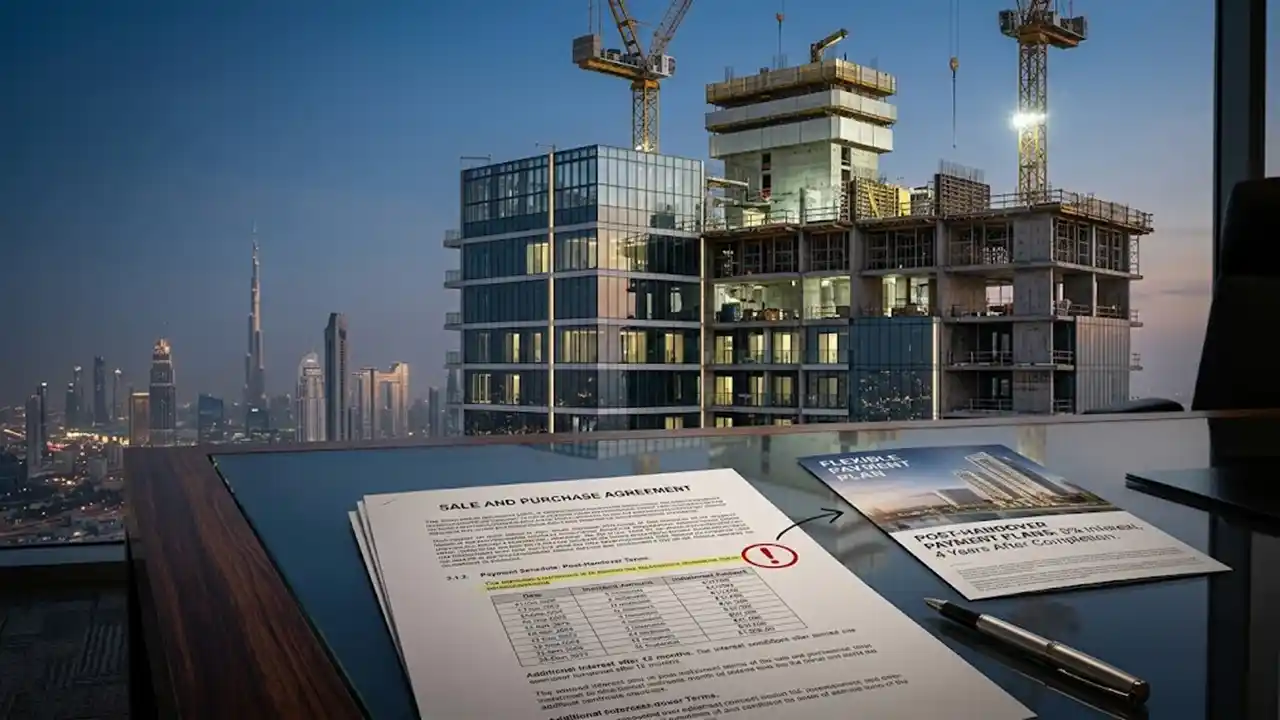
- The difference between the booking form, advertised payment plan and the final Sale and Purchase Agreement
This last point is especially important. Marketing may describe a plan as “post-handover,” but the SPA may still require instalments on fixed dates even if completion is delayed. The signed contract—not the advertisement—ultimately defines the buyer’s obligations.
The best off-plan opportunities in 2026 are projects with genuine scarcity, credible developers, sensible launch prices and a clear end-user or tenant profile. Buying solely because a project is new, luxurious or supported by an aggressive payment plan is not enough.
Ready Property: More Negotiation and Clearer Numbers
Ready property offers something off-plan cannot: evidence.
An investor can inspect the exact unit, assess the building, review actual service charges, study achieved rents and compare registered transactions. The property can also be occupied or rented immediately, which makes the income calculation more reliable.
As the market becomes more selective, serious sellers may be more open to negotiation—particularly when a unit needs renovation, has been vacant for a long period, carries a weak layout or competes with several similar listings.
However, an advertised discount does not necessarily make a property cheap. The correct comparison is with recent completed transactions, not inflated asking prices.
For ready property, investors should calculate net return after service charges, maintenance, vacancy, management fees and acquisition costs. A unit advertised at a high gross yield may produce a far less impressive net result.
Dubai’s rental market continues to provide an important foundation for investment demand. DLD recorded AED 32.2 billion in rental contracts during Q1 2026, including 118,385 new contracts and 135,607 renewals. The number of cancelled contracts also declined by 25%, according to the Dubai Land Department’s rental-market update.
Citywide figures, however, do not tell the whole story. Buildings with good management, practical layouts, strong access and realistic rents can maintain occupancy, while older or poorly maintained buildings may need to compete more aggressively as new supply is handed over.
Investors should therefore ask three separate questions:
- What rent is being achieved today—not merely advertised?
- How many competing units will enter this micro-market over the next two years?
- What is the net yield after all recurring costs and realistic vacancy?
Rental demand in Dubai remains attractive, but future performance will increasingly depend on building quality and exact location rather than the name of the wider community alone.
Villas and Townhouses: Supported by Real End-User Demand
Villas and townhouses remain attractive because they serve a clear lifestyle need. Families generally stay longer, value privacy and outdoor space, and have fewer alternatives than apartment tenants. Low-density supply is also more difficult to reproduce in prime or established locations.
That does not mean every villa is correctly priced. Investors still need to assess plot position, road noise, construction quality, community maturity, maintenance costs and future phases.
Yet, in general, a well-selected villa or townhouse in a desirable family community can offer stronger long-term defensibility than a generic apartment in an area with a large delivery pipeline.
For investors who prioritise capital preservation and long-term appreciation over the highest immediate yield, this segment deserves serious attention.
Apartments: Opportunity Exists, but Price Discipline Is Essential
Apartments remain Dubai’s largest and most accessible investment category. They can provide strong rental demand, lower entry prices and easier leasing than larger homes. But they are also the segment most exposed to repeated layouts, competing launches and concentrated new supply.
The right apartment can still perform well when it has at least one genuine advantage: an excellent purchase price, a trusted developer, a superior layout, walkability, transport access, a strong view, low service charges or limited future competition.
For value-focused buyers, developing locations such as Jumeirah Village Triangle and Dubai Science Park may deserve study where infrastructure, developer quality and entry price align.
In more heavily supplied apartment districts, however, even a good building can become a weak investment if it is purchased above fair value.
In 2026, “good project” and “good investment” are not the same thing. The acquisition price remains decisive.
Commercial Real Estate: One of Dubai’s Strongest Opportunities
Commercial property—particularly well-located offices—remains one of the most compelling areas of the Dubai market.
CBRE’s Q2 2026 review reported that average Dubai office rents increased 13% year-on-year, prime rents rose 16%, and occupancy remained around 94%.
Savills also recorded a 4% quarterly increase in office leasing transactions to 38,082, while average rents held at approximately AED 238 per sq ft.
These figures show a market that remains structurally strong, even though rental growth is beginning to stabilise. Demand for quality offices continues to be supported by business formation and limited availability of prime, efficient space.
For Terra Firma, selected commercial property remains a priority because it can combine strong income with limited quality supply. Double-digit gross returns may still be achievable in individual transactions, but they should never be assumed across the entire market. The purchase price, lease terms, vacancy risk and capital expenditure determine the real return.
For offices, investors should evaluate:
- Building quality and business reputation
- Vacancy or the strength of the existing tenancy
- Net rent after service charges and management costs
- Number of parking spaces
- Floor efficiency, natural light and fit-out quality
- Access to major roads and public transport
- Future competing office supply
- VAT, transfer costs and the likely renovation budget
Retail can also produce excellent returns, but it is even more property-specific. Visibility, frontage, pedestrian and vehicle traffic, parking, permitted use, power capacity, extraction and the surrounding customer profile can matter more than the wider area name.
A retail unit should be valued according to the business it can realistically support—not simply its size or price per square foot.
Our Current Investment Priorities
Our first priority is selected commercial property, particularly offices with strong occupier demand, limited competing supply and attractive income potential.
Carefully chosen retail units can also produce high yields and secure long-term tenants, but frontage, accessibility, permitted use and the surrounding customer base must be analysed carefully.
Villas and townhouses remain attractive for investors seeking long-term appreciation and protection through genuine end-user demand.
Ready apartments can provide immediate income and clearer transaction evidence, but service charges, building quality and competing inventory must be considered.
Off-plan property can still offer excellent opportunities when the developer, contract, payment plan and launch price are right. Generic apartment launches with limited differentiation should be approached more cautiously, particularly in areas facing heavy future supply.
Five Questions Every Investor Should Ask in 2026
Before signing a reservation form or Form F, every buyer should be able to answer these questions:
- What is the property’s fair value based on completed transactions?
- What is the realistic net yield—not the advertised gross yield?
- Who will rent or buy this property from me in the future?
- What competing supply will exist at completion or resale?
- What are my contractual and financial risks if the market or delivery timeline changes?
If these answers are unclear, the investment is not ready—regardless of how attractive the marketing appears.
The Outlook for the Rest of 2026
Dubai’s long-term advantages remain significant: a growing international business base, high-quality infrastructure, a competitive tax environment, a transparent registration system and continued government investment.
At the same time, investors should remain realistic about short-term risks. More residential units are being completed, financing costs still matter, regional events can temporarily affect confidence, and some sellers and developers remain anchored to prices established during a faster market.
Our view is straightforward: Dubai is neither a market to abandon nor a market in which to buy blindly. It is a market in which careful buyers can now separate genuine value from marketing noise.
The strongest investments in the next stage of the cycle are likely to share three characteristics:
- Real scarcity that future supply cannot easily reproduce
- Sustainable income supported by genuine tenant or end-user demand
- A disciplined acquisition price that leaves room for risk and future upside
Final Thoughts
The Dubai real estate market of 2026 rewards patience, research and negotiation.
Commercial property remains especially attractive where quality supply is limited and the income is supported by a strong tenant market. Villas and townhouses continue to benefit from family and end-user demand. Ready properties offer greater transparency and negotiability, while off-plan investments require far more attention to price, developer quality and contract terms than they did during the fastest years of the boom.
The question is no longer simply, “Is Dubai a good place to invest?”
The better question is: Which property, at which price, with which income and exit strategy?
At Terra Firma Real Estate, we have worked in the UAE market for nearly two decades. Our approach is based on actual transaction evidence, realistic return calculations and long-term investment logic—not simply project promotion.
Whether you are considering an office, retail unit, villa, townhouse, ready apartment or off-plan opportunity, the objective should be the same: buy an asset that still makes sense after the sales presentation ends.
This article is provided for general information and does not constitute legal, tax or financial advice. Investors should obtain professional advice and review all contractual documents before purchasing.