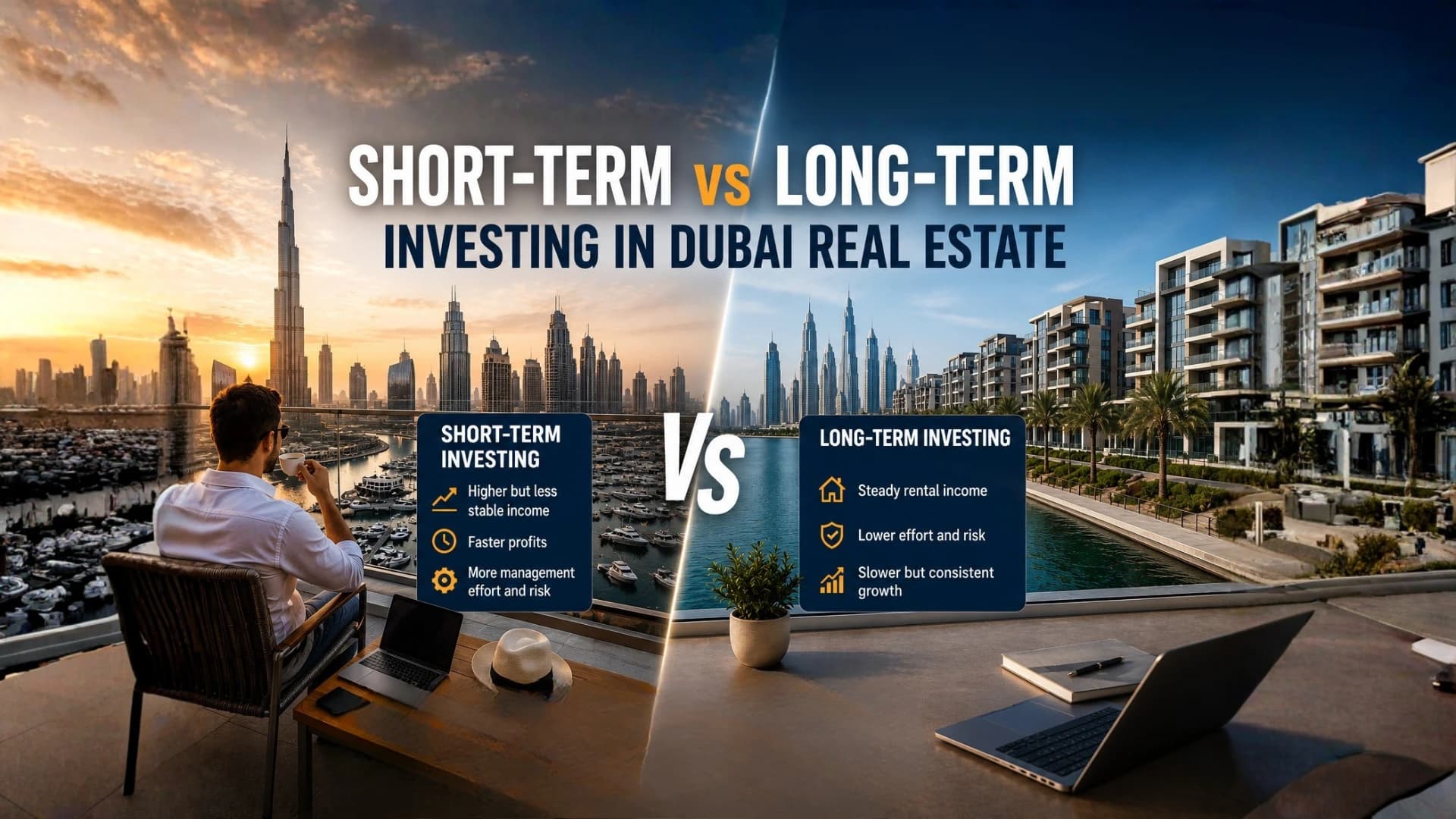
How to Legally Rent Short-Term in Dubai
1. Register and get a licence via Dubai Department of Economy and Tourism (DET)
If you want to rent out your apartment in Dubai on a short-term basis (holiday-home / short-let), here’s a step-by-step guide plus how to pick a good manager.
Short-term rentals (holiday-home, vacation-home, short-let) are allowed — but only if the unit is properly registered with DET and has a valid permit.
You must apply via the DET “Holiday Homes” portal: add the unit, submit required documents (title deed or tenancy agreement + NOC if tenant, DEWA bill if required, ID/passport, etc.).
Once approved, DET issues a “unit permit” that must be displayed if you list the property.
2. Ensure the property and listing meet DET requirements
Only eligible properties: apartments or villas (not hotel-room or prohibited categories) in buildings/areas that allow holiday-homes.
The unit must be fully furnished, meet safety and hospitality standards (fire alarms, guest-info log, furnishings, amenities etc.), and comply with building/community rules.
For each unit, you need a separate permit. If you plan to manage many units (or rent on behalf of others), you may need a trade or operator licence.
3. Handle ongoing compliance
Renew your permit as needed.
Collect and remit any required tourism fees (e.g. “Tourism Dirham”) if applicable, guest-listing/logging requirements, and maintain insurance/standard of care.
4. Prepare your property to attract guests
Furnish the apartment, add amenities, make sure your listing photos are high quality, and set competitive pricing based on demand, seasonality, and area.
Popular high-demand areas tend to include central or prime locations (e.g. Dubai Marina, Downtown, Palm-type areas) where tourist or short-stay demand is higher.
How to Choose a Trusted Short-Term / Holiday-Home Management Company in Dubai
If you don’t want to manage the property yourself — e.g. dealing with bookings, guest check-ins, cleaning, maintenance, compliance — it often makes sense to partner with a professional company. Some of the better-known options in Dubai:
AirDXB
Full-service short-let management: from regulatory registration, listing, pricing, guest communication, maintenance, to furnishing/fit-out and interior design. Claims high occupancy rates and full 360° service.
Frank Porter
Experienced Dubai-based short-let manager managing hundreds of properties. Good for owners wanting professional, reliable service.
Deluxe Holiday Homes
Listed among top property-management companies for occupancy and tailored services.
Silkhaus
More modern/dynamic: focusing on revenue optimisation and newer properties — may suit owners seeking a tech-driven approach.
KeysPlease
Specialises in short-term rentals; provides full property management including bookings, cleaning, maintenance.
What to Check When Selecting a Management Company
Confirm they are licensed / registered under DET to operate short-term rentals. A legitimate company will handle licensing on your behalf.
Ask about their fee structure (management fee, cleaning fee, commission on bookings). Many companies charge a percentage of rental income; typical range might be 15–30%.
What services are included: marketing/listing creation, guest communication, cleaning and maintenance, check-in/out, furnishing, compliance and permit renewals. Full-service companies tend to save you more time and stress.
Review their track record: how many properties they manage, occupancy rates, guest reviews, responsiveness.
Transparency and communication: make sure they provide clear contracts, regular income/expense reporting, and allow personal usage of your apartment (if you want it).
My Recommendations
If you want full hands-off service, go for a company like AirDXB or Frank Porter — they already handle all steps, from licensing to guest turnover.
If you prefer a lighter-touch manager (e.g. just listing and bookings, but you handle cleaning/maintenance), companies like Silkhaus or KeysPlease may suit you better.
Always check whether your building/community permits holiday-home rentals — some buildings or lease agreements prohibit short-let.