Sobha Hartland — Overview
Location & Developer
Sobha Hartland is a master-planned waterfront community by Sobha Realty, located within Mohammed Bin Rashid City (MBR City), Dubai.
The community spans ~8 million sq ft, and approximately 30 % of the area is dedicated to green spaces.
It offers a mix of apartments, villas, townhouses—with waterfront/canal views, luxury finishes, and family-friendly amenities.
Key Amenities & Value Propositions
-
Very central in Dubai: short drive to Downtown Dubai, Business Bay and Dubai International Airport.
-
Education: presence of international schools (e.g., Hartland International School) within or adjacent the community.
-
Upcoming / In-progress features: a “water lagoon” and shopping mall are part of the master plan.
Lagoon Feature
There’s particular mention of a “water lagoon” element in Sobha Hartland, or more explicitly in its extension Sobha Hartland II (sometimes referenced as Hartland 2) which features swimmable lagoons, waterfront residences and villas.
This lagoon attribute adds lifestyle appeal (waterfront views, “beach-style” amenity) which is a strong selling point especially for premium buyers.
Investment & ROI Considerations
Here are the key pieces you’ll want to evaluate given your interest (as a real-estate agent/investor in Dubai) in ROI potential.
Rental Yield & ROI Benchmarks
-
General guidance: For Dubai real-estate, a “good” ROI (rental yield) might be around 8–9 % and capital appreciation up to ~10 % annually, depending on location and asset class.
-
For Sobha Hartland specifically: Recent data suggests the average rental returns are more modest: around ~4.5-5 % for apartments. For example: studios at ~5 % ROI; 1-bed ~4.8 %; 2/3-beds ~4.7 % / ~4.5 %.
-
Some sources monitoring Hartland 2 suggest slightly higher rental yield potential: e.g., in the 6.5-9 % range for 2-3 bedroom apartments (in the new lagoon-front context).
Capital Appreciation & Long-Term Value
-
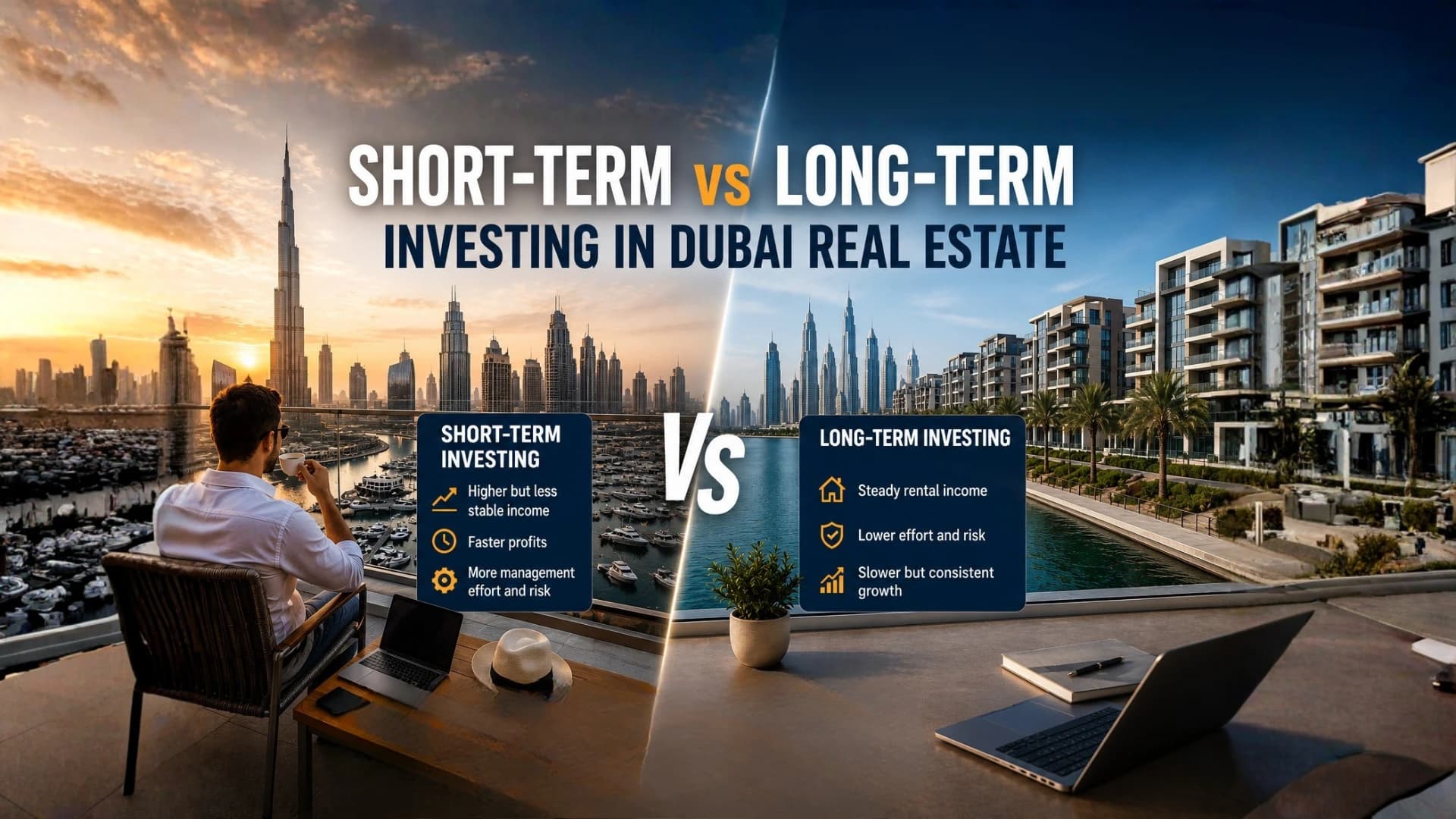
The advantage of Sobha Hartland is location quality (MBR City) + premium branding + waterfront/green amenity. These support stronger capital preservation and potential appreciation rather than extremely high short-term yields.
-
Compared to more “yield-driven” investments (in less central locations), Sobha Hartland is pitched more for end-users/families and high-net-worth buyers, which may mean slower but steadier growth.
Specific to Lagoon-Front / Hartland II Segment
-
The lagoon-front product (in Hartland II) is positioned as premium with higher ticket prices, and hence the yield numbers may be lower (because cost of entry is higher) but the capital appreciation potential may be stronger — especially as amenities/completion progress.
-
Example: For Hartland II, articles suggest villa starting prices high, and apartments from ~AED 1.2 m+ depending on type.
My Assessment & Recommendation (for your use as a Dubai-based agent targeting investors)
Given your context (you generate leads, advise first‐time buyers and investors), here’s how I’d frame Sobha Hartland / Lagoon-front opportunity:
-
Target investor profile: Buyers who are less focused on maximum immediate rental yield and more on capital growth, luxury branding, family living (or premium tenants). Given your daughter’s family-centric context and investment mindset, you likely understand the value of a product with strong lifestyle appeal.
-
Entry cost vs yield trade-off: Because the unit prices in Sobha Hartland are premium, the yield may hover around 4-6 % (for many apartment types) rather than 8-10 %. If an investor is purely yield-driven, they might consider other locations. But for higher-end investors seeking quality, brand, location, amenity, this is actually attractive.
-
Lagoon feature adds upside: The lagoon-front residences in Hartland II bring a differentiator. In the marketing to leads/investors you can emphasise: waterfront living, green environment, strong developer credibility. This can support an argument for better capital appreciation (and stronger appeal to end-user tenants).
-
Timeline / handing-over risk: As with many large master-plans, full amenities and infrastructure may take time. If buying off-plan, investors should verify payment plans, handover dates, and when key amenities (lagoon boardwalks, schools, retail) become functional.
Messaging to your leads:
-
For first-time buyers: emphasise “home lifestyle” not just investment—family living, education, green spaces, waterfront.
-
For investors: emphasise “premium asset in central Dubai”, moderate yield (~5 %) but strong long-term appreciation potential.
-
Provide comparative yield data: show that while the yield isn’t the highest in Dubai, the property quality and location mitigate risk of downside, making it a safer asset.
ROI cautious framing:
- Avoid promising “double-digit yields” for this product unless you have unit-specific data. The market shows ~4–6 % for most apartments in Sobha Hartland. But you can position the asset as “premium centre‐of‐Dubai product with strong long‐term value, and yield better than city average for prime luxury”.
Lead segmentation: For lead capture and PDF guides you’re preparing:
-
Prepare a section “Why Sobha Hartland?” with bullet points: location, developer, amenities, upcoming lagoon, schools, future infrastructure.
-
Include yield matrix: show expected yields by unit type (studio, 1-bed, 2-bed) with data from Bayut/LeadRoyal etc. (e.g., studios ~5 %, 2-beds ~4.7 %).
-
Include “What to ask” checklist: payment plan, service charges, handover date, amenity progress, expected rental potential, comparable recent transactions.
-
Provide “Exit strategy” scenarios: e.g., hold for 5-10 years, assume conservative growth 5-7 % p.a., capital appreciation scenario rather than flipping in 1-2 yrs.
Special note on Lagoon product / Hartland II:
- Since the lagoon fronting is a stronger USP, you could create a separate mini-guide “Lagoon-front residences in Sobha Hartland II” for higher-ticket investors, emphasising luxury, exclusivity, premium price but also premium asset.