


Featured
Real Estate Market
Flexible Office Spaces in Dubai: The Changing Demand for Serviced Offices and Coworking
Flexible Office Spaces in Dubai: The Changing Demand for Serviced Offices and Coworking
Arash Sepassi
Nov 24
1 min
52
Growth alone doesn’t show whether the UAE property market can remain sustainable. A useful way to assess sustainability is to consider whether demand can absorb new supply and whether housing and financing remain accessible to buyers and tenants.
Dubai’s appeal draws on population growth, economic activity and long-term urban plans. These drivers don’t remove market risks: property cycles can cool, supply can rise, and higher borrowing costs can change what investors are willing to pay.
This analysis examines what is sustaining residential demand across the UAE and what could slow it. It also considers how regulation, urban development, economic uncertainty and market stabilization shape the outlook, with practical context for assessing Dubai commercial offices, off-plan opportunities and ready properties. The aim is a balanced view of sustainability: not a promise of continued gains, but a clearer way to judge the conditions behind them.
Population growth is a direct source of housing demand across the UAE. Dubai’s population increased by about 230,000 people in 2026, year to date. The cited annual population growth rate for hubs such as Dubai and Abu Dhabi is 3.5%. Whether the UAE property market is sustainable depends partly on how well housing supply meets this growing population’s needs.
Growth also reflects a wider economic base. The UAE’s real GDP grew by 6.2% in 2025, while non-oil GDP growth reached approximately 4.8% in the last fiscal year. Economic expansion can support household confidence and demand near employment and services. It doesn’t ensure that every property or district will attract equal interest.
Dubai’s sales activity shows the scale of current buyer interest. The emirate recorded about 34,500 residential sales in Q3 2026, with a sales value of AED 70.8 billion. These figures describe transactions, not future price growth. Buyers should assess property condition, location, purchase terms and intended holding period alongside market activity.
Demand is also shaped by the balance between new homes and incoming residents. More than 150,000 residential units are expected to be completed nationwide through 2027. New supply gives buyers more choice, while creating a test for rental demand and resale liquidity. Compare delivery timing and location with the likely tenant profile, rather than treating market-wide sales as proof of demand for every unit.
Running costs matter to owners and tenants. In the UAE, cooling can account for up to 70% of a household’s energy use. Building efficiency, insulation, shading and cooling systems therefore deserve attention alongside headline rent. For buyers assessing yields, recurring costs can affect net income and tenant appeal, particularly where comparable homes offer different levels of comfort or energy performance.
Luxury homes serve a distinct segment, while apartments and family housing meet different needs. A buyer comparing an apartment in Dubai Marina with a family home in JVC should consider the likely resident, nearby services and expected upkeep. For anyone asking whether the UAE property market is sustainable, this property-level view is more useful than broad sales trends alone.
Population gains, economic activity and transaction volumes can support residential growth, while incoming supply and ongoing costs provide a counterweight. Weighing both sides helps buyers and investors assess demand, rental prospects and the resilience of an individual property.
Government policy can influence property demand through residency pathways, building standards and infrastructure initiatives. A UAE property investment of at least AED 2,000,000 can qualify an investor for a 10-year Golden Visa, according to the Federal Authority for Identity, Citizenship, Customs & Port Security. For an expatriate buyer, residency eligibility may form part of a wider investment decision, alongside location, rental prospects and ownership costs.
Prices and rents have moved differently across recent reporting periods. Dubai home prices were almost 13% higher year on year at the end of 2025, while Dubai’s residential rent price index was 6.81% lower year on year in September 2026. The contrasting figures show why investors should assess sale values and rental income separately, rather than assuming both will rise together.
Building regulations also shape the quality and operating profile of new homes. Dubai’s Green Building Regulations and Specifications and Al Sa’fat - Dubai Green Building System set sustainability requirements for new buildings. Energy efficiency, water conservation and indoor environmental quality can affect a home’s long-term appeal and running costs. For buyers, these features matter most when they improve comfort and help manage consumption.
Off-plan and ready-property investments expose buyers to different timelines. Off-plan property represents a substantial part of Dubai’s sales activity, indicating notable transaction activity in that segment. Buyers should weigh the payment schedule, construction progress, handover timing and comparable completed homes. A ready property offers a different assessment: current condition, existing rental demand and any immediate maintenance needs.
Institutional investors and real estate investment trusts, or REITs, offer another route to property exposure. A REIT pools investor capital into real estate assets and distributes income according to its structure. This differs from buying a single home, which concentrates exposure in one asset and location. Compare control, diversification, liquidity and the source of distributions.
Rental yield figures need careful interpretation. Gross residential rental yields in the UAE averaged 4.94% in Q2 2026, while the stated target net rental yield range for UAE property investments is 5% to 8%. Gross and net figures are not directly interchangeable. Vacancy, maintenance, service charges and financing can affect net income, so calculate expected returns using the costs specific to each property.
Sustainable homes may attract buyers who value efficient systems and lower resource use. Consider building standards alongside location, rental demand and upkeep. For example, compare a new home’s efficiency features with a ready property’s condition and likely maintenance needs. For a focused view of Dubai property opportunities, weigh these policy and investment factors against your objectives.
Economic forecasts and borrowing costs can influence buyer confidence, financing decisions and rental demand. Conflicting forecasts underline uncertainty about the economic outlook. For real estate investors, the practical question is how economic conditions may affect employment, household budgets and willingness to commit to property.
Interest rates matter because they affect the cost of borrowing and the budget available to financed buyers. The Central Bank of the UAE Base Rate was 3.90% from 17 September 2026. A higher financing cost can reduce purchasing capacity or change the returns an investor needs from a property. Buyers should model their expected payments against rental income, recurring ownership costs and their ability to hold the asset through changing conditions.
Market activity offers another measure of sentiment. Dubai recorded fewer than 37,000 residential sales in Q2 2026, 29% fewer than in Q2 2025. Sales were worth AED 88 billion in Q2 2026, about 43% less than a year earlier. Fewer transactions can mean buyers are taking more time or becoming more selective. It does not, by itself, establish that every district or property type faces the same conditions.
Price indicators also require careful reading. Dubai’s residential sales price index was 1.27% lower year on year in September 2026, while CBRE’s measure of Dubai residential prices was 1.9% higher year on year in Q2 2026. These figures cover different periods and measures, so they should not be treated as a direct contradiction. Investors can use them as reminders to assess local comparable properties and recent transaction conditions.
For rental investors, uncertainty can affect both tenant budgets and achievable rents. Population growth may support housing demand, but affordability, employment conditions and new supply also shape tenant choices. Assess rental yields against realistic occupancy assumptions, maintenance needs and financing costs. A property that works only under optimistic rent assumptions may be less resilient if conditions shift.
Families and other end users may respond to economic pressure by changing location, home size or purchase timing. An investor assessing a home in Dubai Marina, Business Bay or JVC should consider the likely resident profile, access to employment and nearby competing homes. District appeal can’t replace a property-level assessment. Compare the unit’s price, condition, expected rental income and holding costs before deciding whether its fundamentals are sound.
Interest-rate sensitivity and economic forecasts matter, but neither alone determines the UAE real estate market’s direction. Review borrowing assumptions, income sources and demand for the specific property together. This helps you judge whether an investment remains viable under less favourable conditions, rather than relying only on past growth or headline transaction figures.
Dubai’s housing pipeline includes more than 525,000 homes scheduled for delivery from 2027 through 2030. In Abu Dhabi, about 7,400 homes were completed in 2025, bringing total residential stock to about 315,000 units; the cited figures provide no comparable future delivery schedule.
The Dubai 2040 Urban Master Plan aims to accommodate 5.8 million residents. Its long-term direction links housing with urban growth, transport and community needs. Abu Dhabi Plan 2030 also emphasizes sustainable urban development, giving investors a broader planning context for considering where housing and infrastructure may evolve.
These plans matter because demand depends on more than the number of new homes. Access to employment, transport, services and public spaces can influence a location’s appeal to residents. As Dubai and Abu Dhabi expand, consider whether a development connects to established communities and planned infrastructure. Unit numbers alone don’t indicate future demand.
Environmental performance is another test. Dubai’s Al Sa’fat - Dubai Green Building System covers energy efficiency, water conservation, building systems and indoor environmental quality, sustainable materials, and waste management. The Dubai Clean Energy Strategy sets a 2050 horizon for clean energy. Together, these initiatives provide a policy framework, but a project’s actual design and operating performance still matter.
How sustainable are UAE property developments in their use of water and energy, and in their response to climate risk? Building requirements and features can address energy efficiency and water conservation, while shading, insulation and efficient cooling can improve resilience to heat. Buyers should examine the specific building systems, water-saving measures and maintenance needs. A sustainability label alone doesn’t show how a home performs day to day.
The Sustainable City in Dubai illustrates how a development can combine environmental features. Its homes and parking areas incorporate solar panels, while residential clusters include car-free areas, electric vehicle charging, smart irrigation, water-saving systems and green spaces. These features demonstrate a design approach, not a guarantee of lower costs or stronger resale demand. Their value depends on upkeep, actual use and residents’ needs.
Global sustainability frameworks also shape buyer expectations. LEED and Estidama are green building certifications used in the UAE. Certification can help structure an assessment, but practical details remain essential: energy systems, water use, indoor comfort and the quality of shared spaces. Buyers can weigh these environmental factors alongside location, housing supply and long-term usability.
For investors, the key is to connect each master plan to a property-level assessment. Consider delivery timing, nearby infrastructure, environmental design and the resident profile a development serves. This helps distinguish planned growth from durable demand for usable housing.
The UAE’s market outlook is better read as a set of local cycles than as one national trajectory. Abu Dhabi’s residential sales price index was 11.17% higher year on year in September 2026, while Ras Al Khaimah apartment prices were 4.73% lower year on year that month. These contrasting results show why broad national averages can conceal meaningful differences between locations and property segments.
How does the current UAE property cycle compare with previous booms and downturns? Its varied regional results don’t establish a direct historical comparison or prove that earlier patterns will repeat. To assess whether the UAE property market is sustainable, focus on current demand, pricing and local conditions rather than a simple boom-or-correction label.
A UAE property market forecast described annual price growth of 4% to 6% in 2026. Treat that as an outlook, not a forecast for every home or district. Differences between Abu Dhabi and Ras Al Khaimah demonstrate why investors should test a property’s individual case, including its intended use, location and buyer or tenant profile.
How does a price correction become a risk? If buyers’ expectations move ahead of what residents can afford, or rental income can support, values may come under pressure. A correction can also affect resale timing and the amount an owner can recover. In Dubai and Abu Dhabi, the exposure of a particular property depends on its segment, competing choices and the strength of end-user demand.
Oversupply risk isn’t simply a matter of counting announced projects. It arises when homes aimed at similar buyers or tenants reach the market at once, especially if demand can’t absorb them at expected rents or prices. The result may be more incentives, slower leasing or longer resale periods in affected communities. Assess a property’s direct alternatives, not just the number of developments across the UAE.
For a more resilient decision, test the investment under different conditions. Consider whether rental income still covers ownership costs if leasing takes longer, and whether the property remains suitable if resale takes time. These scenarios are more useful than assuming continuous appreciation. They also clarify whether the UAE property market is sustainable for your investment horizon and objectives.
Stabilization can mean buyers become more selective, not that every location or project moves in step. Compare local evidence with the property’s own fundamentals, then base a purchase decision on realistic demand and a manageable holding period. That discipline helps separate attractive opportunities from assumptions built on market momentum.
For a property-level discussion of UAE opportunities, speak with Terra Firma about your investment priorities.
The current cycle is uneven across markets, but the available indicators don’t support a firm comparison with earlier booms or downturns.
Terra Firma helps buyers and investors connect market conditions with property-level decisions. Its transaction advisory supports the acquisition and sale of ready and off-plan properties, commercial properties and retail spaces. For a sustainability-focused assessment, consider how a property’s location, competing supply, likely rental demand and ownership costs align with your investment objectives.
This approach can help clarify whether a residential purchase, commercial asset or off-plan opportunity fits your priorities and risk tolerance. It keeps the decision grounded in the specific property, rather than broad forecasts or assumed returns.
For a considered discussion of your Dubai property objectives, contact Terra Firma.
To assess whether the UAE property market is sustainable, consider your investment horizon, income priorities and tolerance for changing conditions. An appealing opportunity isn’t simply one that benefits from market momentum. It should also make sense at the individual property level, with a clear purpose and realistic assumptions about demand, costs and resale prospects.
Before committing, define what you need the asset to do. A focus on rental income calls for different priorities than a purchase for personal use or long-term value. Keep that objective central as you consider Dubai’s evolving districts and property options. A disciplined decision can help you move forward with greater confidence, without relying on a single market forecast.
Contact Terra Firma about UAE property to discuss your priorities and consider a suitable next step. Approach the market with a clear plan, and make each decision on its own merits.
The 2026 outlook combines continued investment potential with signs of market moderation. Population and urban development support demand, while new supply, borrowing costs and affordability may temper activity. For buyers, this means focusing on a property’s location, intended use and likely rental demand rather than treating broad forecasts as a guarantee. A durable opportunity should make sense under realistic assumptions, not depend solely on further price growth.
Population growth can support housing demand, but it doesn’t prove that prices are sustainable. Job growth matters when it translates into stable household income and demand for homes near employment. Assess these factors alongside new supply, affordability and the needs of likely residents. A district attracting residents for varied employment and services may have different demand drivers from a community reliant on one buyer or tenant profile.
A reliable assessment needs consistent measures: gross or net yield, property type, vacancy assumptions, ownership costs and reporting period. For an investment decision, calculate expected income after property-specific expenses, then compare it with your return requirements and risk tolerance. The same method can help assess apartments, villas and commercial assets within the UAE.
The market can respond to borrowing costs, investor confidence, employment and tenant affordability. Higher interest rates may constrain financed buyers, while changes in oil revenue can influence wider economic activity and sentiment. External shocks can also affect business decisions and household budgets. Assess a prospective property’s exposure through its financing structure, likely tenant base and rental assumptions. This shows how its investment case may respond when conditions change.
Ownership eligibility, tax treatment and residency pathways are separate considerations. Foreign buyers should establish which ownership arrangements apply to a specific property and understand the transaction’s tax implications before committing. Property investment may also support eligibility for certain residency routes, subject to the relevant criteria. Consider a visa pathway alongside the property’s suitability, not as proof that the purchase is financially sound.
Flexible Office Spaces in Dubai: The Changing Demand for Serviced Offices and Coworking
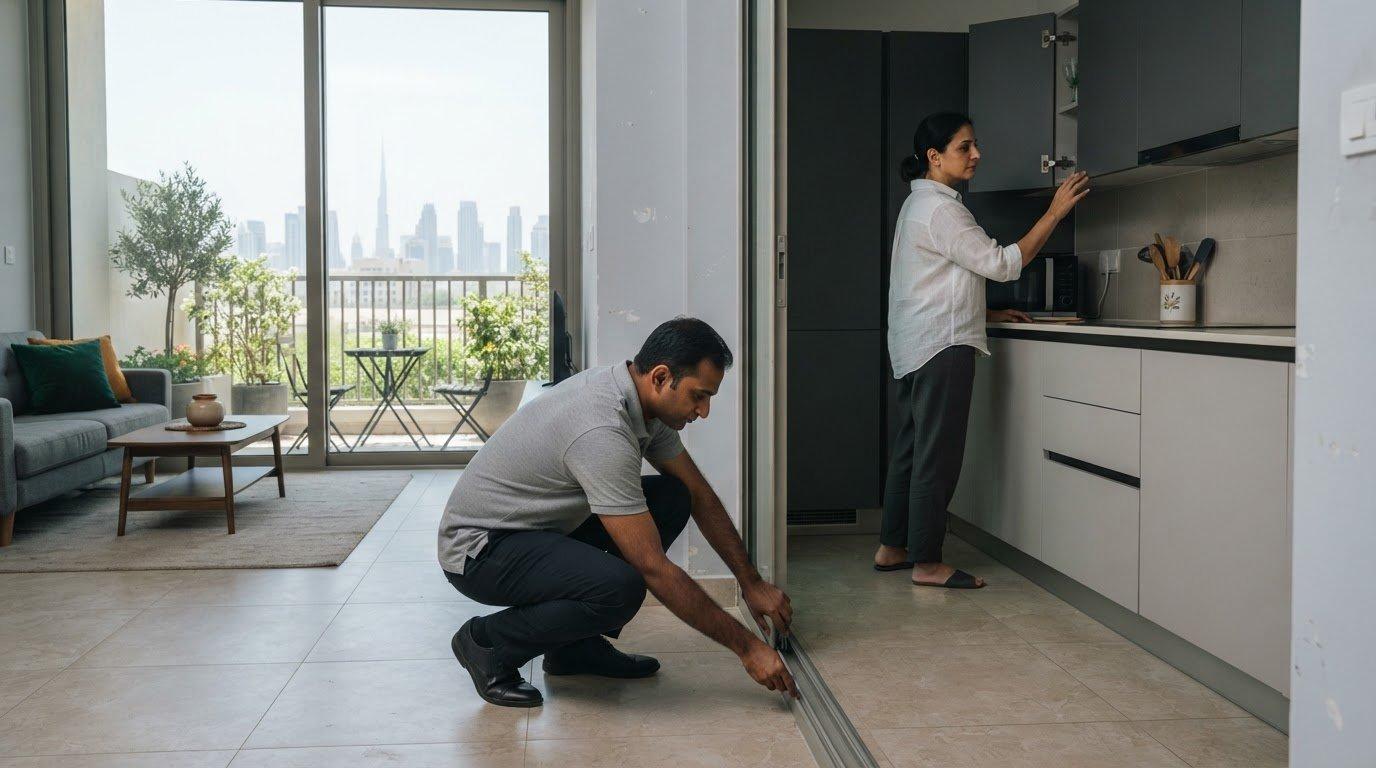
Selling ready property in Dubai? Learn how to price your home, account for transfer fees and prepare the paperwork for a smoother UAE property sale process.

Discover how smart homes and artificial intelligence are transforming the UAE property market. Explore home automation, AI-powered security, energy efficiency and the future of intelligent residential developments.
Get in touch with our expert team and let us help you find the perfect property in Dubai. We're here to guide you through every step of your real estate journey.